
Patient Portals, Telehealth and Beyond: The Healthcare Technology Solutions Driving Improved Patient Outcomes

Aaron Glauser
July 16, 2025
AdvancedMD surveyed healthcare providers to find out what healthcare technology solutions have the biggest impact on patient outcomes.

AdvancedMD regularly conducts surveys to gain deeper insights on the ambulatory care space. As an all-in-one practice management, EHR, and patient engagement platform, it is imperative that we not only understand our customers’ technology needs, but also how healthcare technology impacts patient outcomes.
For our latest survey, we wanted to find out which healthcare technology solutions have the biggest impact on patient care. What tools lead to better outcomes? Which solutions offer reliable and trustworthy data and analytics to help build out treatment programs? Do patients still call their practice when they want to schedule an appointment … or is everything done online?
Our survey findings offer valuable insights on everything from the technology solutions that are driving the biggest gains to the rise in patient expectations.
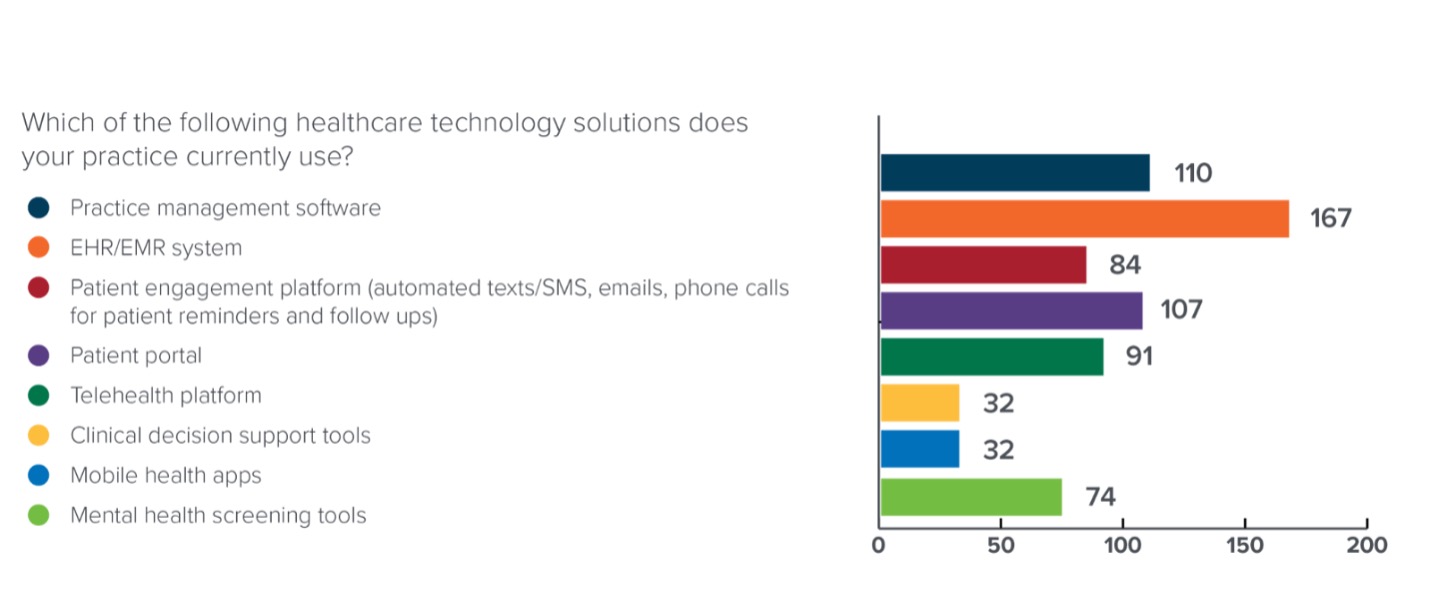
More than half of the survey respondents have implemented patient portals.
It’s no surprise that most of our survey respondents have implemented EHR/EMR solutions, but less than half report using patient engagement tools that can automate key patient communications, including text and email notifications.
In fact, more survey respondents use patient portals than patient engagement platforms—and while patient portals are key to creating a more satisfying (and convenient!) patient experience, patient engagement tools can significantly improve some of the biggest challenges private practices face. Automated reminders not only help minimize no show rates, they can also impact a practice’s bottom line by offering patients a quick and easy way to pay their medical bills.
Imagine, when a payment is overdue, having an automated notification sent to the patient’s preferred communication channel that includes a link to pay the bill online.
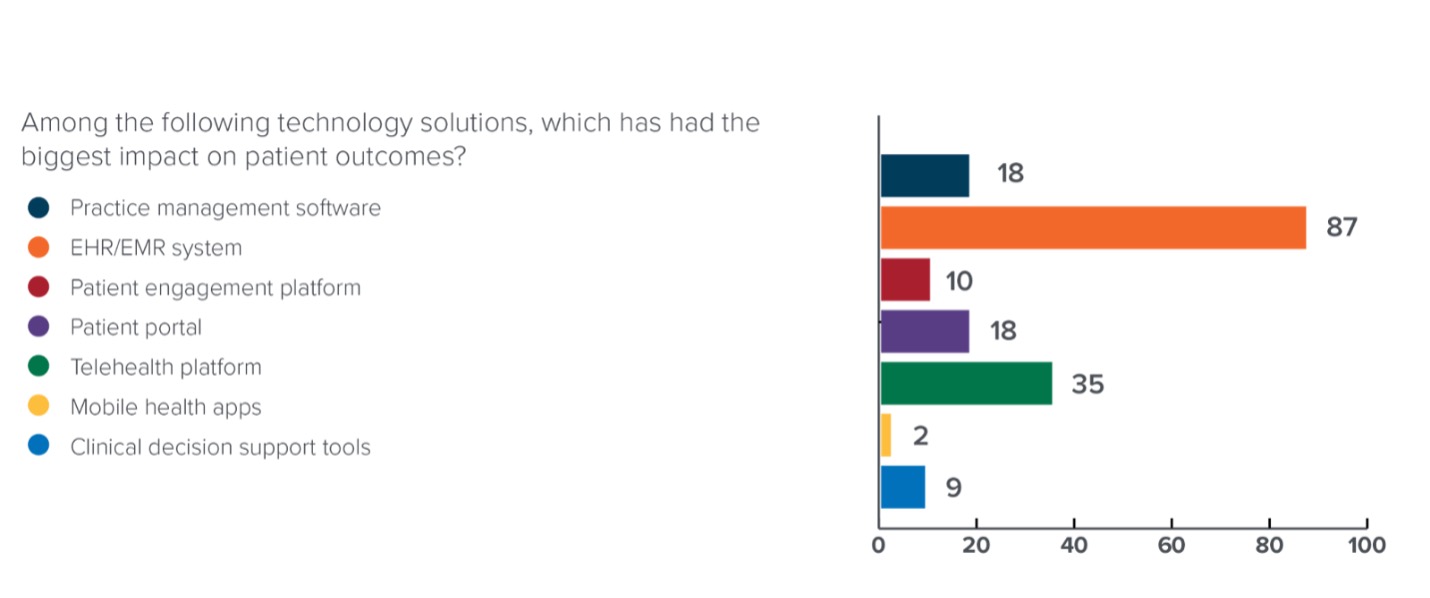
Telehealth platforms have the biggest impact on patient outcomes after EHR/EMR systems.
While an overwhelming majority of respondents said that their EHR/EMR systems have the biggest impact on patient outcomes, telehealth platforms were the second most cited response, well ahead of clinical decision support tools and mobile health apps.
In the past five years, telehealth has become a critical component of the healthcare experience. According to the American Medical Association (AMA), less than 15% of providers were using telehealth tools prior to the pandemic in 2018. By 2022, 74% physicians surveyed by AMA said that their medical practice offered telehealth services.
Because telehealth offers an effective and easily accessible way for providers to oversee chronic conditions, manage medications, and provide mental health services, it will become even more important in the coming years as providers look to support an aging patient population with an increased demand for long-term care.
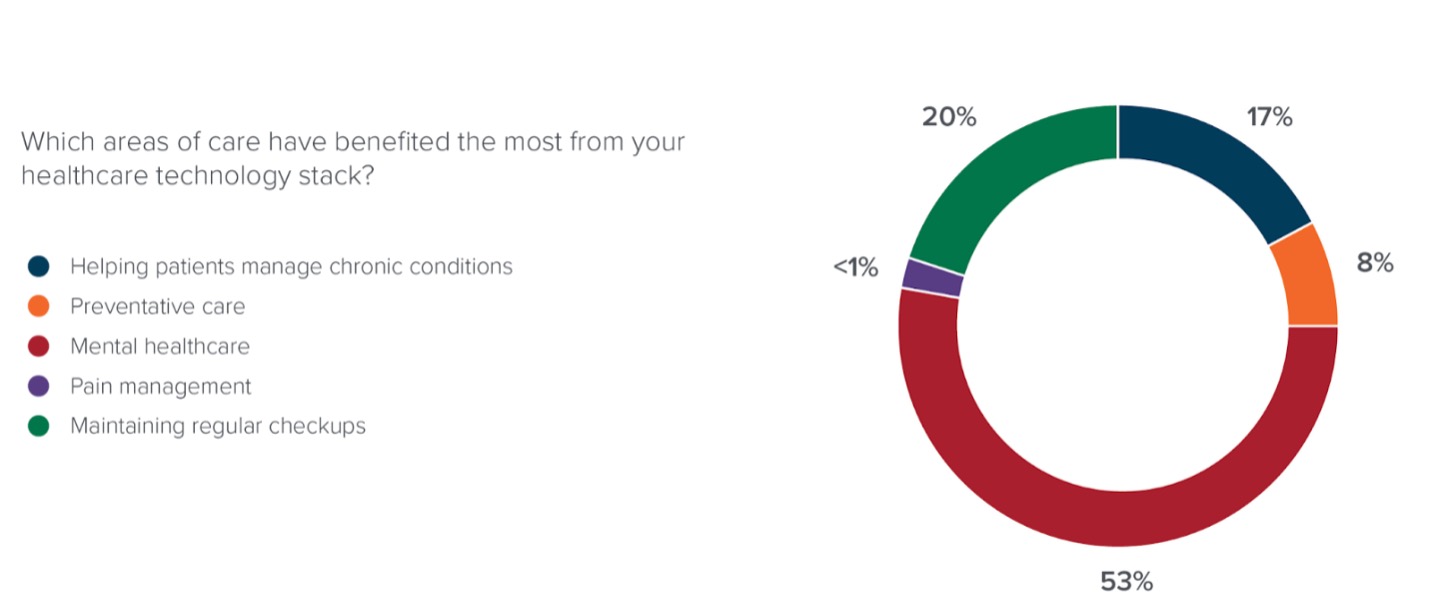
The area of care that sees the biggest benefit from healthcare technology solutions: mental health.
With telehealth solutions having such a massive impact on patient outcomes, it makes sense that mental health services would be the area of care that sees the biggest benefit from healthcare technology. Mental health and telehealth go hand-in-hand, allowing patients to discuss their mental health needs from the comfort of their home.
A study analyzing telehealth usage among patients in Colorado found that the demand for telehealth appointments when seeing a behavioral health or primary care provider remains “much higher” than pre-pandemic levels. After analyzing payer claims data across all provider types, the study revealed that telehealth accounted for 58% of mental health visits in 2023.
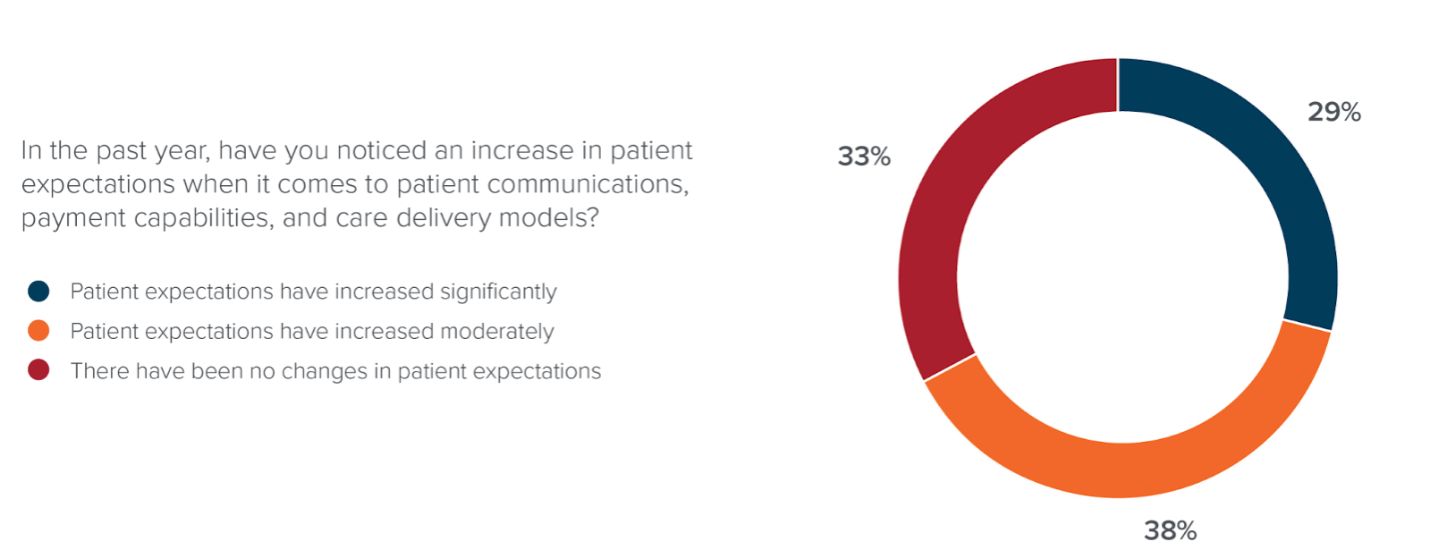
Patients expect more when it comes to communications from their providers, payment capabilities, and care delivery options.
Nearly 70% of survey respondents say that patient expectations have increased during the past year, with patients wanting more from their providers when it comes to communications, payment capabilities, and care delivery options. Industry analysts have referred to the rise in patient expectations as the consumerization of healthcare—a trend that involves patients taking a more active role in their healthcare experience.
“As this trend continues, healthcare organizations must recognize that many of the assumptions that they have made about healthcare consumers no longer hold true,” according to a McKinsey & Company report from earlier this year. “Addressing these changed expectations and interests can unlock substantial opportunity to engage consumers across their healthcare journeys more effectively and improve business results.”
To create a more patient-centered practice that meets patient demands, practices should consider self-service tools that allow patients to schedule their appointments, online payment and digital wallet capabilities for medical bills, and patient engagement platforms that allow the patient to easily communicate with their provider via text or email—or the practice’s patient portal platform.
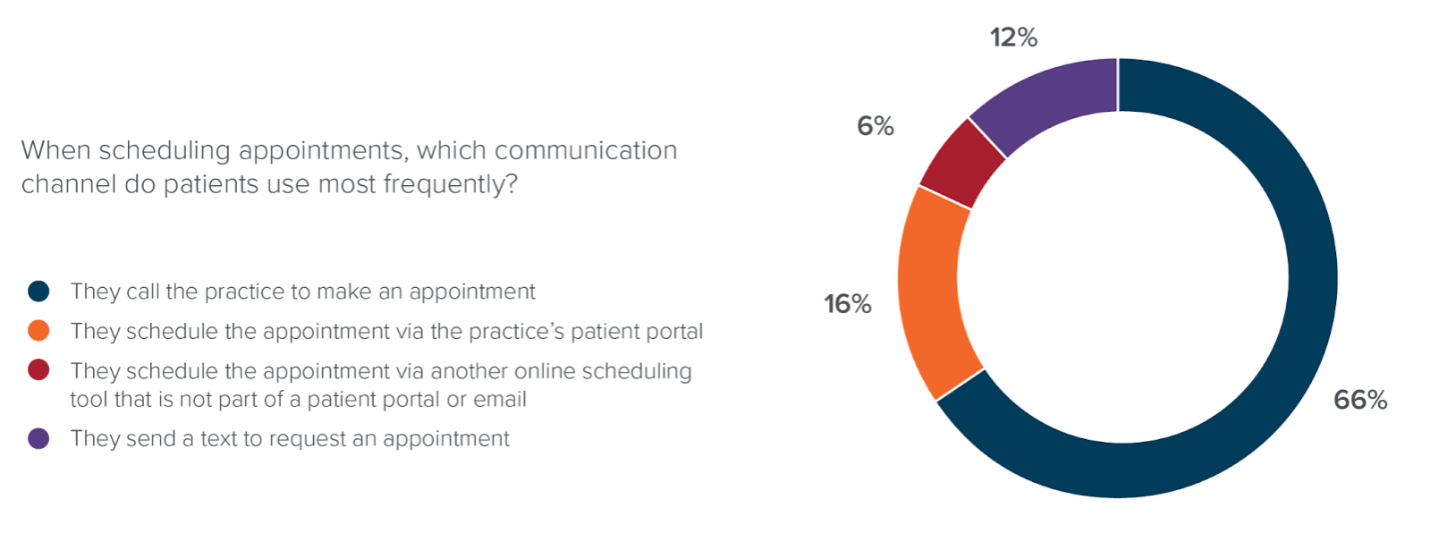
More than 65% of survey respondents say that most patients schedule their appointments by phone.
Even as patient expectations climb and the “consumerization of healthcare” plays a bigger role in patient satisfaction, 66% of survey respondents say that patients most frequently make a phone call to schedule an appointment versus sending a text, scheduling an appointment online, or via the practice’s patient portal.
While phone calls remain the dominant scheduling method for many private practices, modern healthcare demands providers offer multiple communication channels to meet varying patient demands, including self-scheduling tools, patient portals, and online platforms. These digital options cater to patients who prefer 24/7 accessibility and instant confirmation when trying to schedule a medical appointment. They also are incredibly effective at reducing administrative burdens on staff.
Practices that blend traditional phone availability with digital capabilities can accommodate diverse patient preferences and improve operational efficiency—ensuring patient satisfaction stays high for all patients.
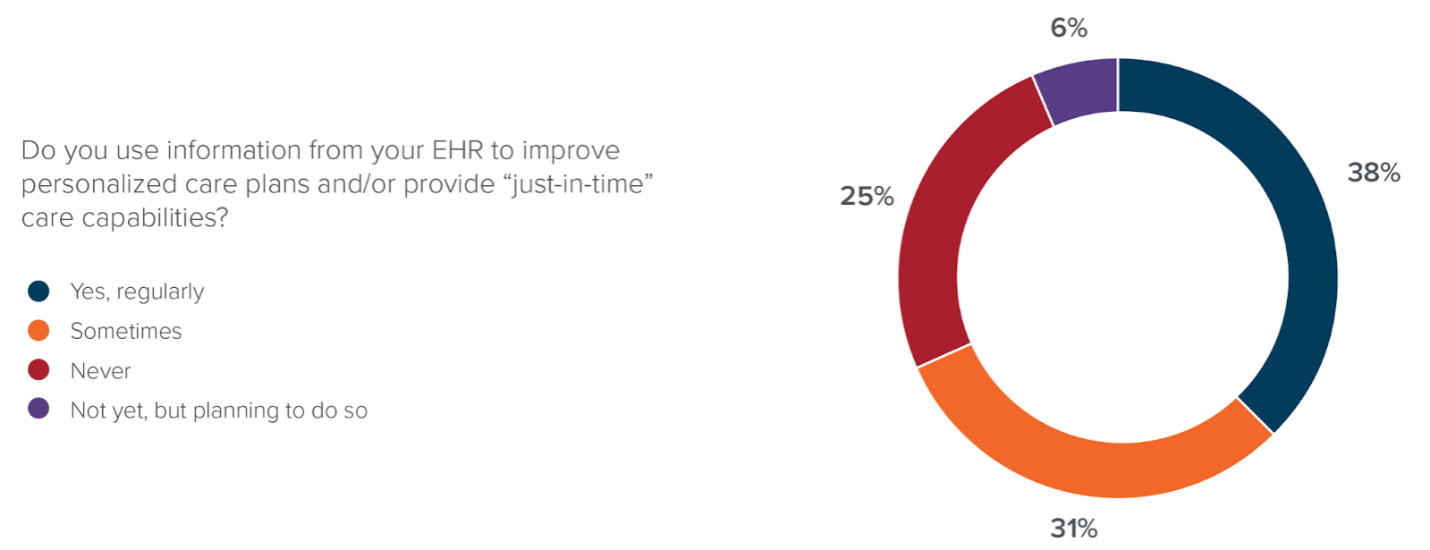
Nearly 70% of survey respondents use information from their EHR to improve personalized care plans.
A notable number of private practices are leveraging information stored in their EHR to improve patient outcomes. According to our survey findings, 69% of respondents said that they regularly or sometimes use information from their EHR to build more personalized care plans and provide “just-in-time” treatments for patients in need. Another 6% said they are planning to do so.
An effective EHR not only stores valuable information, but also structures it in a way that enables providers to use it for more informed decision making. Medications, lab results, allergies, medical histories—EHRs have a wealth of information that, when optimized, can offer valuable insights to help providers deliver individualized care.
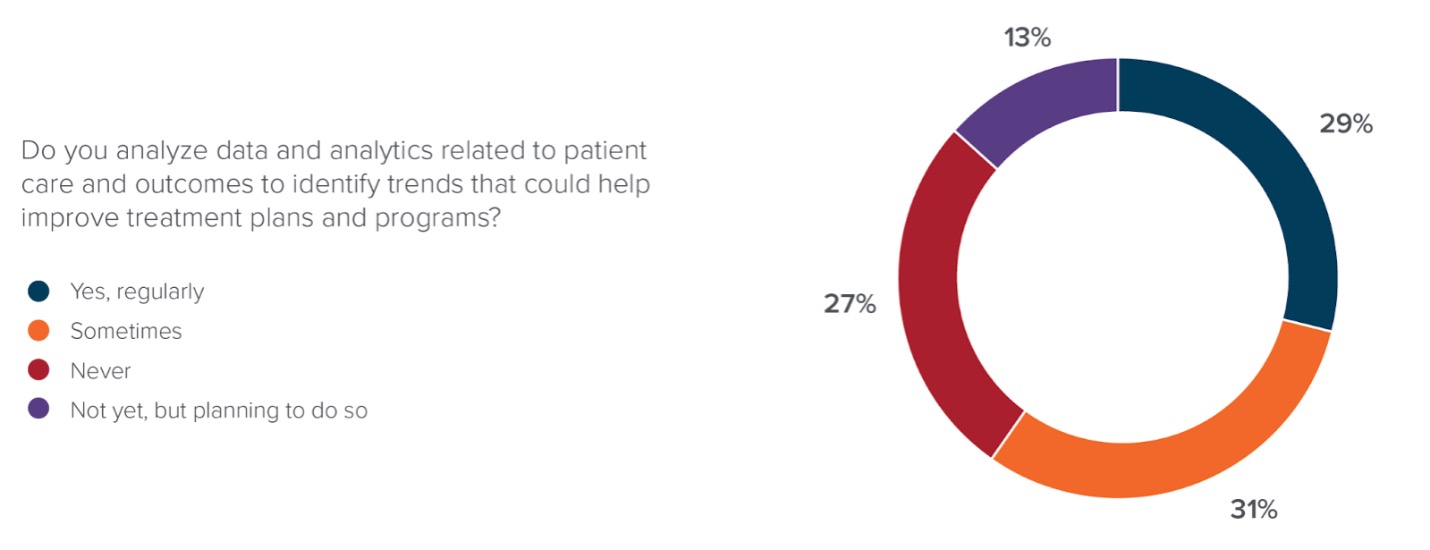
More practices are using data and analytics to improve care plans versus simply relying on patient data.
Sixty percent of survey respondents said that they leverage data and analytics related to patient care and outcomes to identify trends that can improve treatment plans and programs—another 13% report they are planning to do so.
While this is slightly fewer than the share of practices leveraging patient data from the EHR, it is still a promising trend. There is no shortage of healthcare data that could prove valuable to private practices—especially for providers who support rural areas and underservice patient populations.
With AdvancedMD, practices gain access to actionable data and insights and customizable reports. We also offer Population Health tools that streamline value-based care reporting for providers who participate in Medicare programs.
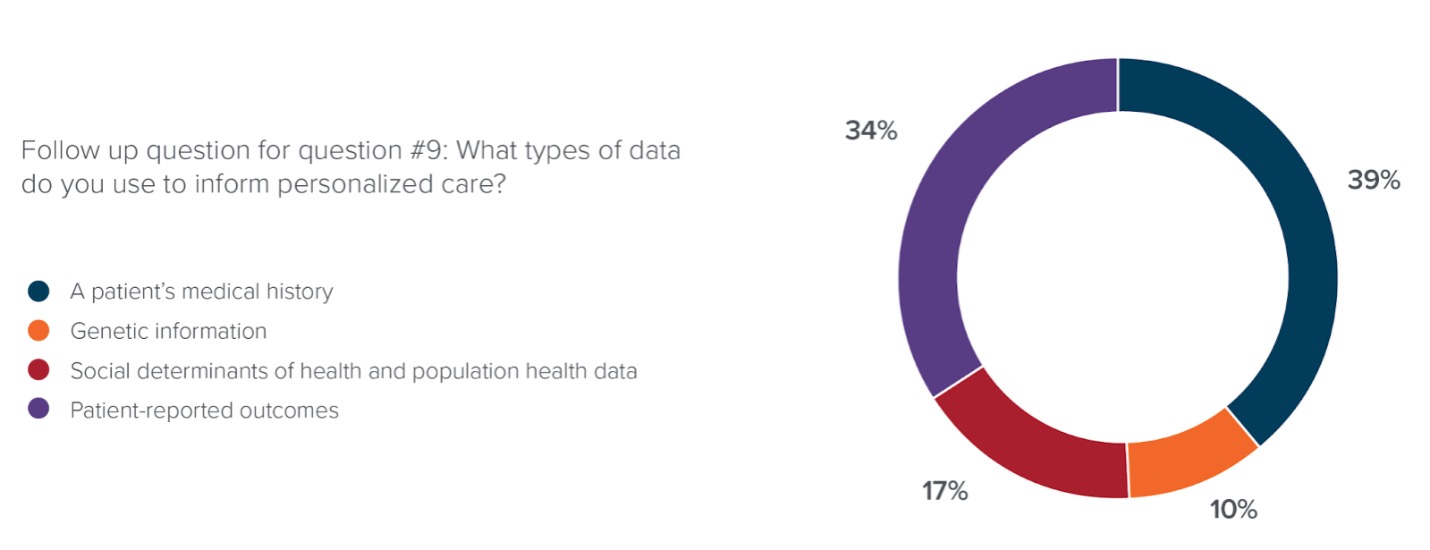
When it comes to personalized care, most practices rely on a patient’s medical history and patient-reported outcomes to create treatment plans.
According to our survey findings, 53% of respondents said that they either regularly or sometimes leverage patient data to deliver more personalized care plans, and another 21% said that they are planning to do so. The primary forms of patient data they rely on: the patient’s medical history and patient-reported outcomes.
Only 10% of practices say that they use genetic information and less than 20% leverage social determinants of health (SDoH) and population health data. For practices that support under-served communities, SDoH and population health data can be extremely helpful when trying to reduce healthcare disparities and create a more equitable healthcare landscape.
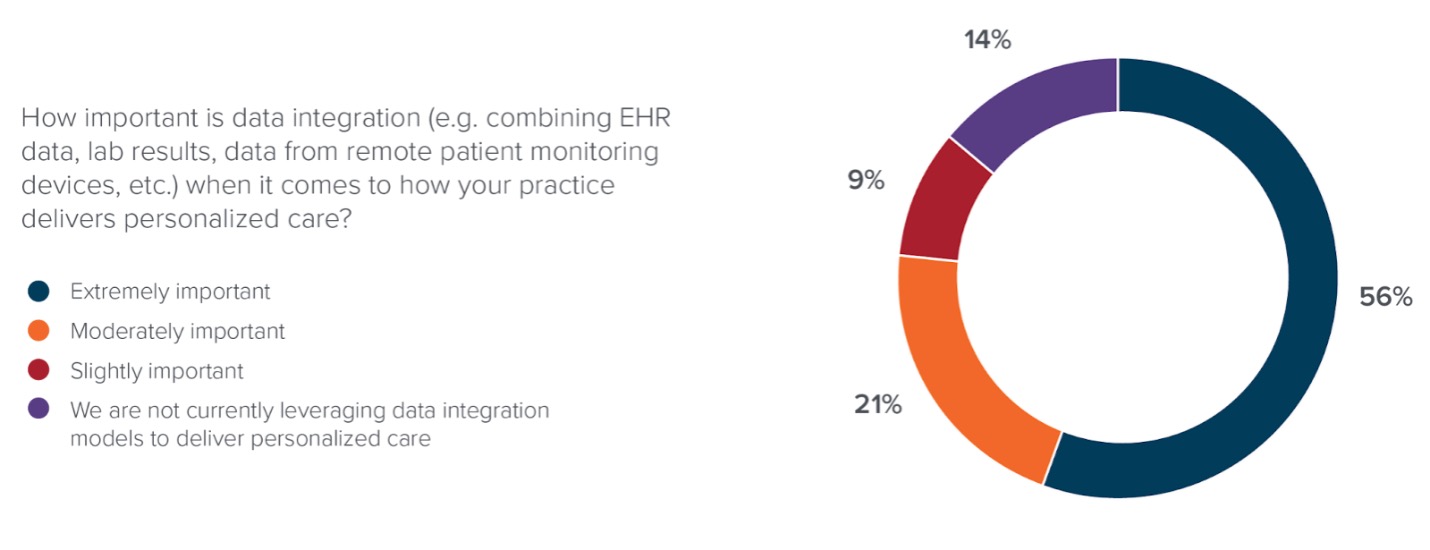
More than 85% of survey respondents say that data integration is important to delivering personalized care.
An overwhelming majority of survey respondents agree that data integration is important to delivering personalized care, although the severity of importance is slightly varied. Still, more than half of the respondents said that data integration was “extremely important”—a stance that we’ve seen proven true time and again.
In fact, data integration gets to the heart of why AdvancedMD is focused on building a unified healthcare technology platform. Our software solutions seamlessly integrate so that data from your EHR is automatically fed into our practice management platform and vice versa—same with out patient engagement tools.
Reliable and effective automations across our practice management, EHR, and patient engagement solutions ensure that patient data is accurate and updated across all platforms. It’s key to creating effective and efficient healthcare technology that streamlines daily workflows, improves patient outcomes, and fortifies the health of your practice.
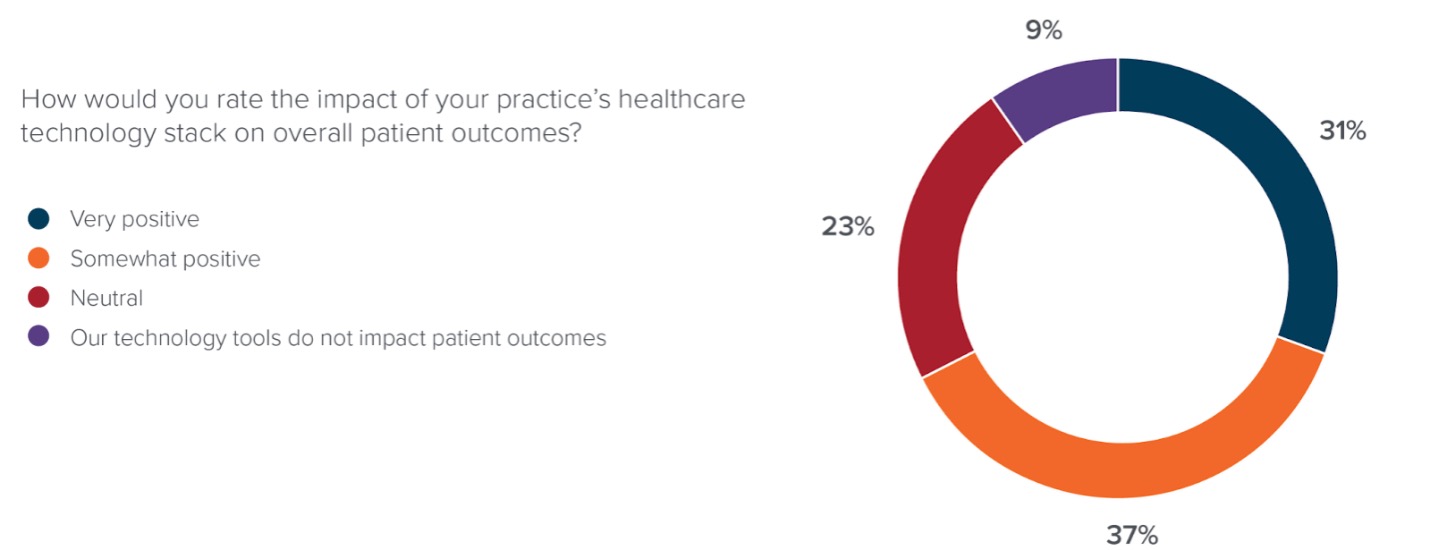
The majority of survey respondents recognize a clear connection between their healthcare technology stack and quality of care they provide.
According to the survey findings, 68% of survey respondents rated the impact of their practice’s technology solutions on patient outcomes as “very” or “somewhat” positive. Such a substantial percentage underscores just how crucial a practice’s technology investments are to the quality of care a private practice can provide.
Without a doubt, effective healthcare technology plays an integral role in a thriving practice, enabling accurate documentation, streamlined workflows, improved care coordination, and enhanced patient engagement—all critical factors in achieving positive health outcomes. Today’s AI and technological advancements will continue to serve as a catalyst for better patient care for the providers who understand the crucial role of healthcare technology solutions within their practice.
For the practices believe their healthcare technology stacks has little to no impact on patient outcomes, it may be worth reassessing their current platforms and exploring new solutions that can deliver the results
Curious how AdvancedMD can help you build a thriving practice? Check out our latest ebook that serves as a rally cry for independent physicians feeling battered by the onslaught of large entity acquisition and consolidations.
Download it for free now at: Time for Independents to Shine
Survey methodology: AdvancedMD surveyed private practice employees via an online form in April, 2025. The survey had a total of 206 responses.
Get a Free, Personal & Live Demo
Get an in-depth overview of AdvancedMD and our Amazon Web Services cloud platform to learn how automated and unified software can make life better for every role of your practice (patients included).
Request live demo